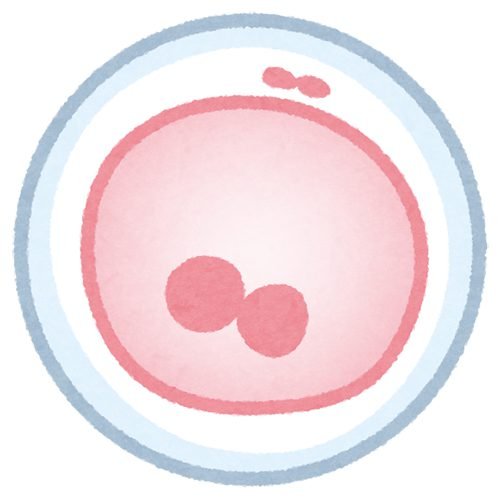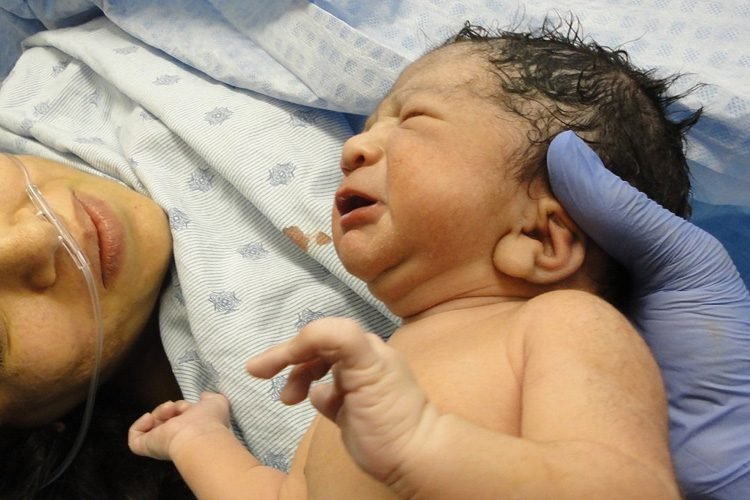
During an IVF cycle, more good-quality embryos are often created than can be transferred at once. Instead of losing them, these embryos can be frozen and used later in a Frozen Embryo Transfer (FET).
How are embryos frozen?
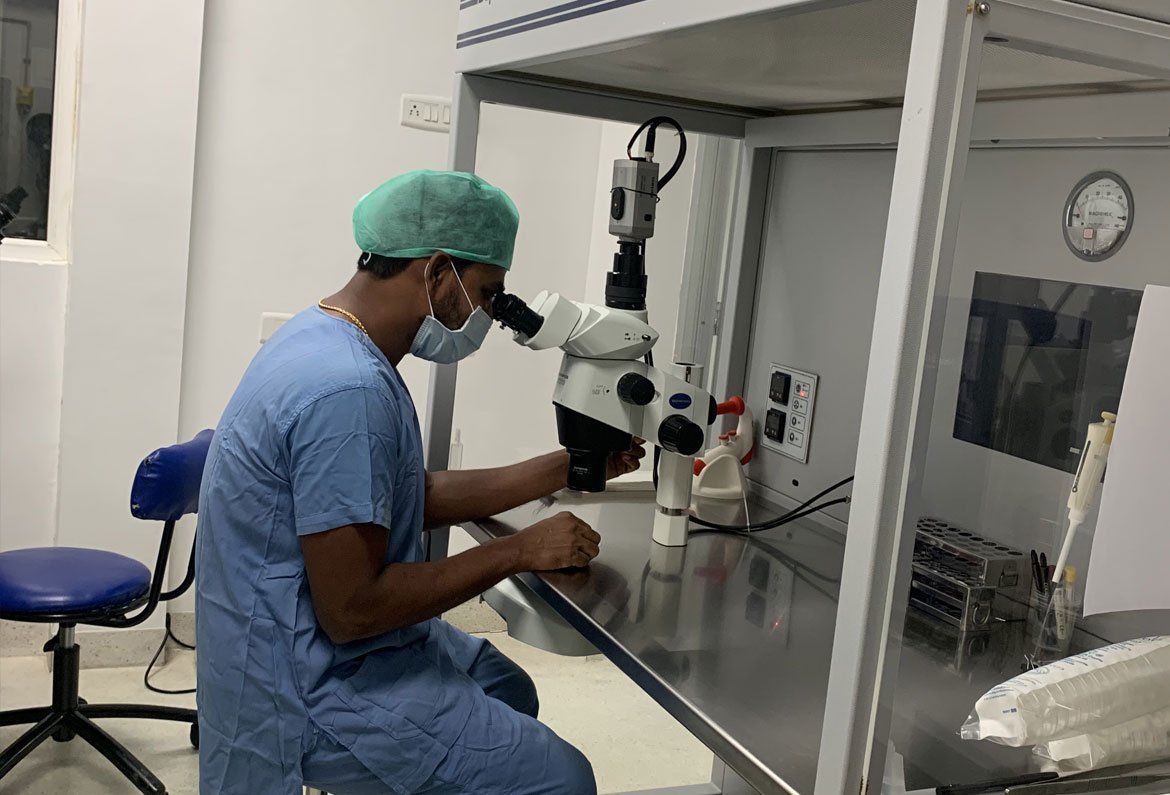
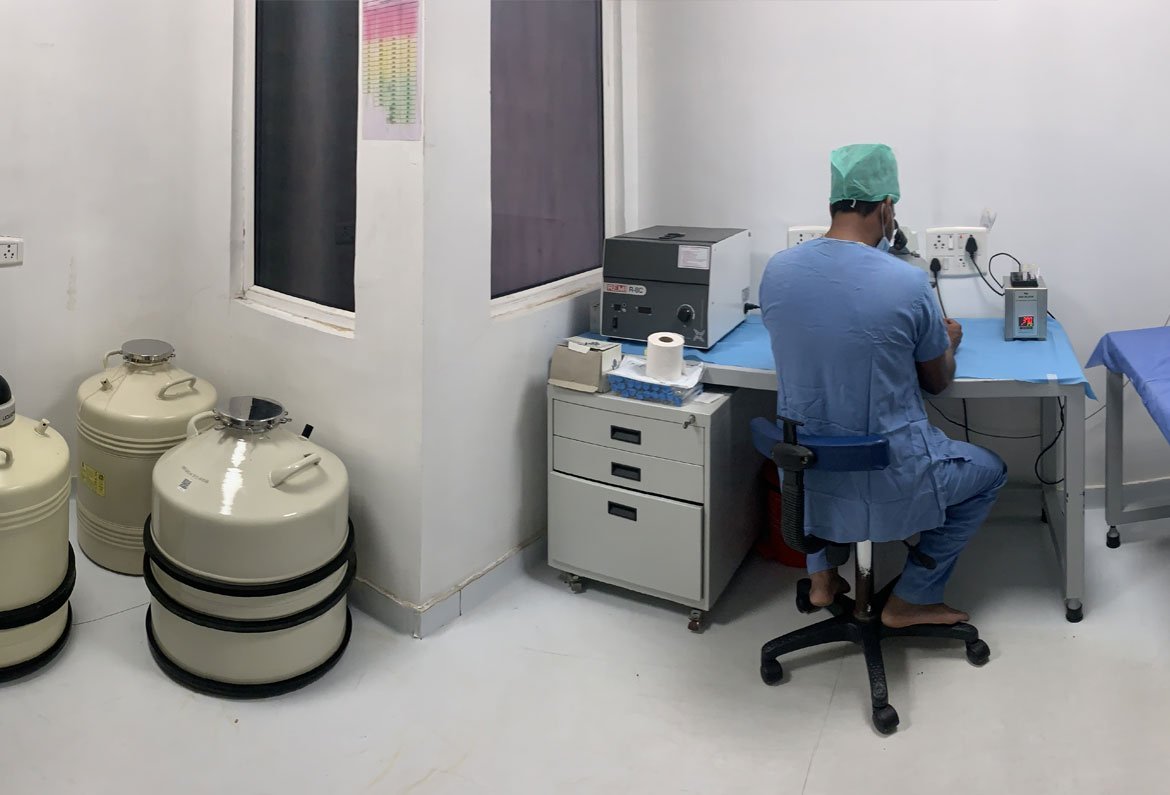
We use vitrification, an ultra-rapid freezing technique that turns the embryo into a glass-like state without forming damaging ice crystals. The embryos are then stored safely in liquid nitrogen at −196 °C. Survival rates after thawing are very high, usually above 90%.
Benefits of frozen embryo transfer
- Equally good success: clinically, FET gives pregnancy rates as good as fresh transfers
- A more natural environment: the uterus has time to recover from stimulation medicines
- Lower risk of OHSS: transfer can be delayed if the ovaries are over-stimulated
- More chances from one cycle: another try without repeating stimulation and egg collection
- Family planning: embryos can be used years later for a sibling
What happens in an FET cycle?
The lining of the uterus is prepared, either in a natural cycle or with simple hormone tablets. Once scans show the lining is ready, the embryo is thawed and transferred, a quick and painless procedure. A pregnancy test follows about two weeks later.
Embryo freezing and the Two Cycle Program
Under our Two Cycle Program, surplus good-quality embryos from the first cycle are frozen and thawed at a discount, with no charge for the embryo transfer in the second cycle.
Learn more about cryopreservation at Meenakshi, or speak to our team about whether FET is right for you.
Medical disclaimer: This article is for general information only and is not a substitute for professional medical advice. Please consult our specialists for guidance about your own health.