
When a couple has difficulty conceiving, many people assume the problem lies with the woman. In reality, male factors contribute to nearly half of all cases. The good news is that most causes can be identified with simple tests and many can be treated.
Common causes of male infertility
- Low sperm count (oligospermia), fewer sperm than normal
- Poor motility, sperm that do not swim well
- Abnormal shape (morphology), which affects the ability to fertilise an egg
- Azoospermia, no sperm in the semen
- Varicocele, swollen veins in the scrotum that heat the testes
- Hormonal problems, infections or previous surgery
- Lifestyle factors such as smoking, alcohol, obesity, stress and heat exposure
The first test: semen analysis
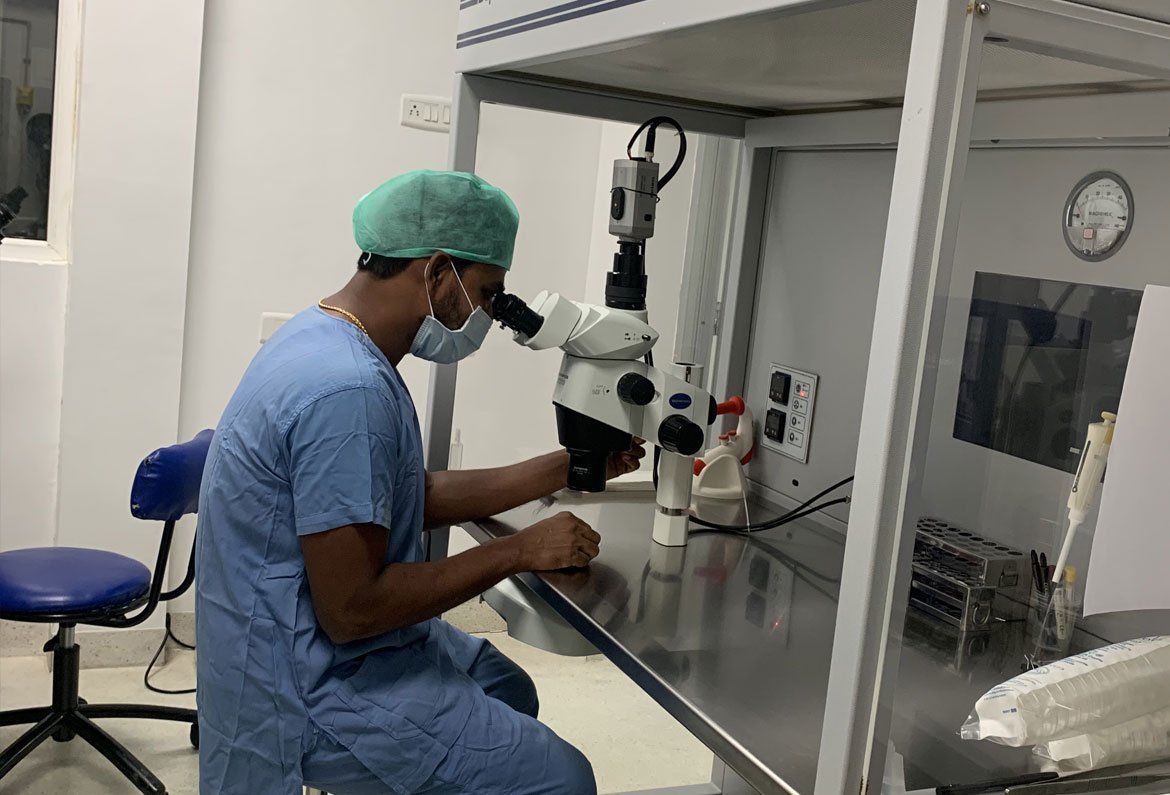
A semen analysis is simple, painless and gives a lot of information about sperm count, motility and shape. If the result is abnormal, it is usually repeated after a few weeks, and further tests such as hormone levels or a scrotal scan may be advised.
Treatment options
Lifestyle changes
Stopping smoking, reducing alcohol, losing weight, avoiding tight clothing and hot environments, and eating a balanced diet can improve sperm quality within about three months, the time it takes for new sperm to develop.
Medicines and surgery
Hormonal problems and infections can be treated with medicines. A varicocele can sometimes be corrected surgically.
Assisted reproduction
For mild problems, IUI with washed sperm may be enough. For more severe problems, ICSI needs just one healthy sperm for each egg. Even in azoospermia, sperm can often be retrieved surgically from the testis for ICSI.
Planning ahead
Men about to undergo cancer treatment, or who work away from home, can store sperm safely through semen freezing.
Male infertility is common and nothing to feel ashamed about. A simple test is the first step towards the right treatment.
Medical disclaimer: This article is for general information only and is not a substitute for professional medical advice. Please consult our specialists for guidance about your own health.